
Drones for a Sustainable Future
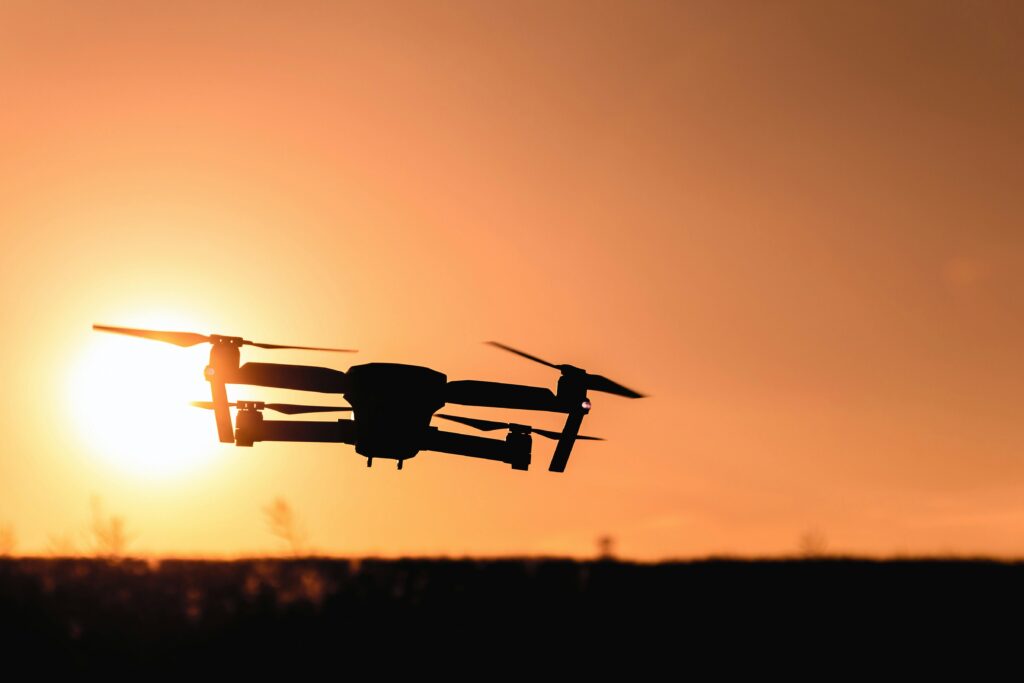
Unmanned Aircraft Systems (UAS), commonly known as drones, have evolved from niche military and recreational tools into pivotal instruments for global sustainability. As industries strive to meet net-zero targets, drone technology offers a unique combination of high-precision data collection and low-emission mobility. However, a holistic assessment requires looking beyond operational efficiency to consider the environmental costs of hardware production, noise pollution, and the complexities of integration into existing logistics.
1. Precision Agriculture and Ecosystem Restoration
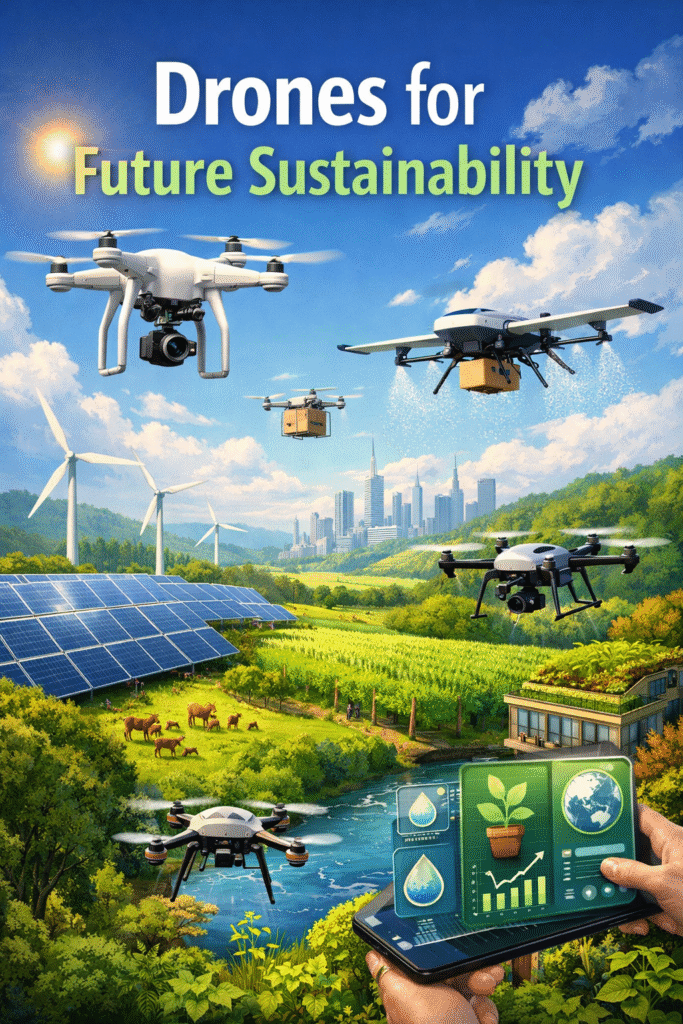
One of the most immediate impacts of drone technology is seen in “Precision Agriculture” and conservation. By utilizing advanced sensors and thermal imaging, drones allow for a level of granular management that traditional machinery cannot match.
- Resource Optimization: Drones monitor soil health and moisture in real-time. For instance, the Choctaw Nation in Oklahoma utilized UAS to identify diseases in pecan trees, improving crop yields by 200% while reducing unnecessary resource use.
- Chemical Reduction: Precision spraying ensures that pesticides and fertilizers are applied only where needed. This “spot-treatment” approach prevents chemical runoff into water sources and preserves soil integrity by avoiding the compaction caused by heavy tractors.
- Reforestation: Companies like DroneSeed are utilizing UAS to accelerate post-wildfire recovery, planting millions of trees in areas that are often inaccessible to human crews.
- Wildlife Conservation: Research entities, such as NOAA, use drones to monitor endangered species like the North Atlantic right whale or count penguin populations with minimal habitat disturbance compared to manned aircraft.
2. Decarbonizing Logistics: The Last-Mile Challenge
The transportation sector is a primary target for drone integration, particularly for “last-mile” deliveries—the most carbon-intensive part of the supply chain.
Research into companies like Zipline has demonstrated a 98% reduction in delivery emissions for medical supplies in Rwanda compared to traditional vehicle transport. Similarly, Walmart has expanded its drone delivery services across several US states to replace unplanned, short-range car trips for small grocery items.
However, the sustainability of drone logistics is not absolute:
- Payload Limitations: While a drone is more efficient than a diesel truck for a single small package, it cannot compete with the efficiency of a fully loaded electric van carrying hundreds of parcels.
- Infrastructure Demands: Extensive drone networks may require more localized warehouses. If these facilities increase total electricity and land use, they might partially offset the carbon gains achieved through flight.
3. Industrial Efficiency and Renewable Energy
Drones serve as “force multipliers” in the maintenance of green infrastructure. Inspecting renewable energy assets—such as offshore wind turbines or vast solar farms—is traditionally dangerous, expensive, and time-consuming.
- Maintenance Gains: Automated inspections can reduce the time required to check wind turbines by 50% and lower solar farm inspection costs by nearly 40%.
- Emission Monitoring: Advanced “AUSEA” drones equipped with laser spectrometers can detect methane leaks at industrial sites 24 times per second. This allows companies to identify and repair “emission hotspots” far faster than manual ground patrols.
4. Navigating Trade-offs: Noise and Life-Cycle Impacts
An objective view of drone technology must acknowledge its “hidden” environmental footprints. Organizations like the European Union Aviation Safety Agency (EASA) are currently developing standards to prevent “greenwashing” in the sector.
- Acoustic Impact: Noise pollution is a significant barrier to social acceptance, particularly in urban areas. EASA is establishing maximum allowable noise levels for electric Vertical Take-Off and Landing (eVTOL) aircraft to protect human health and wildlife.
- The Battery Paradox: While drones eliminate tailpipe emissions, the production and disposal of lithium-ion batteries carry their own environmental burdens. A “Product Environmental Footprint” (PEF) approach is being developed to assess the total life-cycle impact—from raw material extraction to end-of-life recycling.
- Regulatory Obstacles: Approximately 12% of drone professionals cite regulatory uncertainty as a major hurdle. Harmonizing airspace rules is essential to ensure that “green” drone operations can scale without compromising safety.
Conclusion and Future Outlook
Drone technology is a formidable ally in the quest for sustainability, offering unprecedented efficiency in agriculture, energy, and emergency services. Yet, it functions best as a specialized tool within a broader ecosystem rather than a universal replacement for ground transport. To truly align with goals like the EU Green Deal, the industry must prioritize the development of longer-lasting solid-state batteries, harmonized noise standards, and circular economy principles for hardware.
A Question for the Reader
As we move toward more autonomous skies, do you believe the convenience of 15-minute drone delivery justifies the potential increase in urban noise pollution and the energy required to maintain localized drone hubs?
References
- Federal Aviation Administration (FAA). (2022). 7 Ways That Drones Foster Sustainability.
- European Union Aviation Safety Agency (EASA). (2025). Drones & Air Mobility: Noise & Sustainability Standards.
- Van Rees, E. (2024). The Sustainability Aspects of Drone Technology. Commercial UAV News.
- Deloitte. (2025). Drones and the European Green Deal: Embracing Technology for a Sustainable Future.
- Morrison, R. (2024). The Impact of Innovative Drone Technology on Emission Reduction Strategies. Industrial Decarbonization Network.
- Gulati, B. S. (2025). Drones and Sustainability: Reducing the Carbon Footprint of Modern Farming. Vaimanika Aerospace.