
Green Economy and Sustainable Development: Differences and Common Ground

The global community faces urgent challenges such as climate change, biodiversity loss, and growing inequality. Addressing these issues requires rethinking how economies function and how societies define prosperity. Two concepts that dominate today’s discussions are the Green Economy and Sustainable Development. While often used together, they are not identical. Instead, they represent complementary approaches with overlapping objectives.
The Green Economy: Principles and Focus
A green economy is defined as low-carbon, resource-efficient, and socially inclusive. Growth in such an economy is driven by investments that reduce emissions, enhance efficiency, and protect ecosystems. According to the Green Economy Coalition, five guiding principles shape this vision:
- Wellbeing – creating genuine prosperity that includes social, human, and natural capital, not just financial wealth.
- Justice – ensuring fairness within and across generations, with an emphasis on equity and empowerment.
- Planetary Boundaries – protecting biodiversity and respecting ecological limits.
- Efficiency and Sufficiency – promoting sustainable production and consumption, aligning incentives with environmental and social costs.
- Good Governance – building transparent, accountable, and participatory institutions.
In practice, the green economy highlights economic systems and incentives, focusing on investment, employment, technology, and financial reforms that align with ecological and social goals.
Sustainable Development: A Broader Agenda
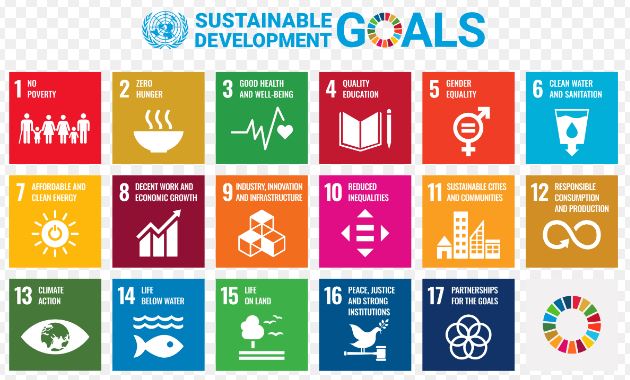
Sustainable development, crystallized in the 1992 Earth Summit and later in the 2030 Agenda for Sustainable Development, encompasses a wider vision. At its core are the 17 Sustainable Development Goals (SDGs) adopted by the United Nations in 2015. These goals go beyond environmental protection: they address poverty eradication, health, education, gender equality, peace, and global partnerships.
Thus, sustainable development is a multi-dimensional framework that integrates environmental, social, and economic priorities, ensuring long-term well-being for both people and the planet.
Where They Meet
Although distinct, the two concepts overlap significantly:
- Both stress the need to remain within planetary boundaries while ensuring social justice.
- Both recognize the importance of inclusive growth—prosperity that leaves no one behind.
- Both depend on global and local governance systems that are transparent, accountable, and participatory.
- The Green Economy can be seen as a practical pathway—focused on investments, incentives, and institutional reforms—through which the broader goals of Sustainable Development can be realized.
Responsibilities Across Actors
The transition towards a green economy and the achievement of sustainable development require action from all parts of society:
- Governments (Public Sector): create enabling policies, regulate harmful activities, and invest in green infrastructure and education.
- Businesses and Firms: redesign production models to reduce emissions, innovate in clean technologies, and ensure fair labor practices.
- Civil Society and NGOs: advocate for justice and transparency, raise awareness, and build partnerships between communities and decision-makers.
- Households and Individuals: practice responsible consumption, reduce waste, and support sustainable products and services.
Your Task
Reflect on your own context:
- If you are part of a household, what small but meaningful choices could reduce your ecological footprint?
- If you work in a company, how can your organization integrate greener practices into its daily operations?
- If you are engaged in civil society, how might you raise awareness or hold institutions accountable?
- If you are linked to the public sector, how can policies or local initiatives be shaped to leave no one behind?
Think of one concrete action in your daily life or professional role that aligns with the principles of a green economy. Write it down, share it, and commit to trying it this week. Small steps, when multiplied, become the foundation of systemic change.
References
- Green Economy Coalition (2020). The 5 Principles of Green Economy. Retrieved from https://www.greeneconomycoalition.org/news-and-resources/the-5-principles-of-green-economy
- United Nations Environment Programme (UNEP). Green Economy and Resource Efficiency. Retrieved from https://www.unep.org/regions/asia-and-pacific/regional-initiatives/supporting-resource-efficiency/green-economy
- United Nations (2015). The 2030 Agenda for Sustainable Development. Retrieved from https://sdgs.un.org/goals